

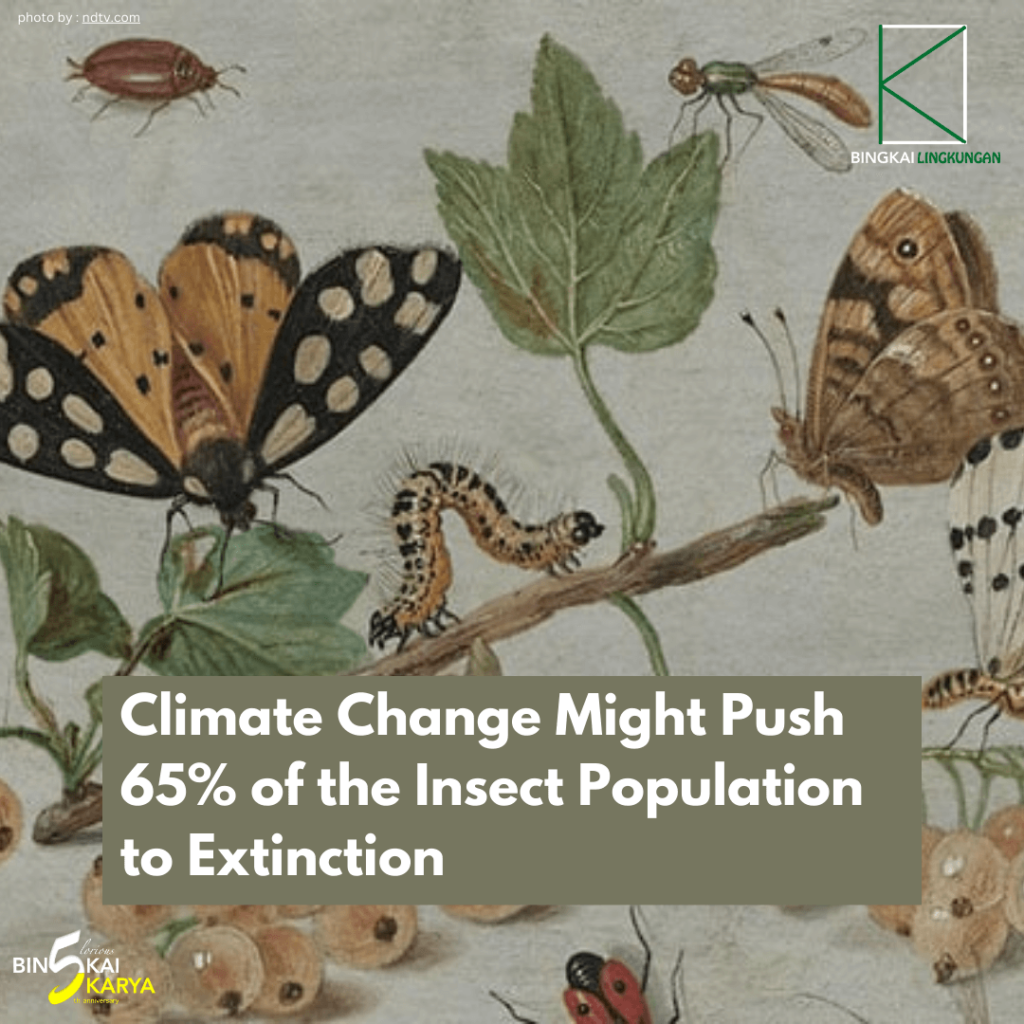
When we talk about climate change, we immediately think about global warming. But there are other aspects of this phenomenon that we as humans have not considered. A new NASA research model explains how insect populations are responding to severe temperature changes likely caused by climate change.
In a recent study published in Nature Climate Change, scientists found that 65% of the insect populations they studied could become extinct within the next century. Insects play many important roles in Earth’s ecosystems – they help produce fruits, vegetables, and flowers through pollination. They decompose organic matter, and they even help control harmful pests. However, there are gaps in our understanding of how insects and ecosystems are responding to climate change.
According to the report, 65% of the 38 insect species studied could face a greater risk of extinction in the next 50 to 100 years due to extreme temperature changes. Cold-blooded insects are particularly vulnerable to temperature changes because they cannot control their body temperature when the outside temperature changes drastically.
To get a more detailed picture of how temperature changes will affect insect populations, Duffy and his colleagues combined climate projections from the World Climate Research Program, data on how insects behave at different temperatures, and mathematical models – what scientists call “dynamic modeling”. This approach is unique in that it combines climate projections with existing insect temperature response models to generate insect population projections. Previous studies had provided insights into insect population growth rates, but they had never extended the models to the population level.
Read also : Indonesia’s New Capital Relocation To Take Animals Habitat Into Consideration
“The ecological and data-driven models in this study could enable more accurate predictions of ecological responses than we’ve ever had before and inform more targeted strategies to help species adapt to climate change,” said Auroop Ganguly, a researcher at Northeastern University and co-author on the study.
Source: climate.nasa.gov
ndtv.com
