

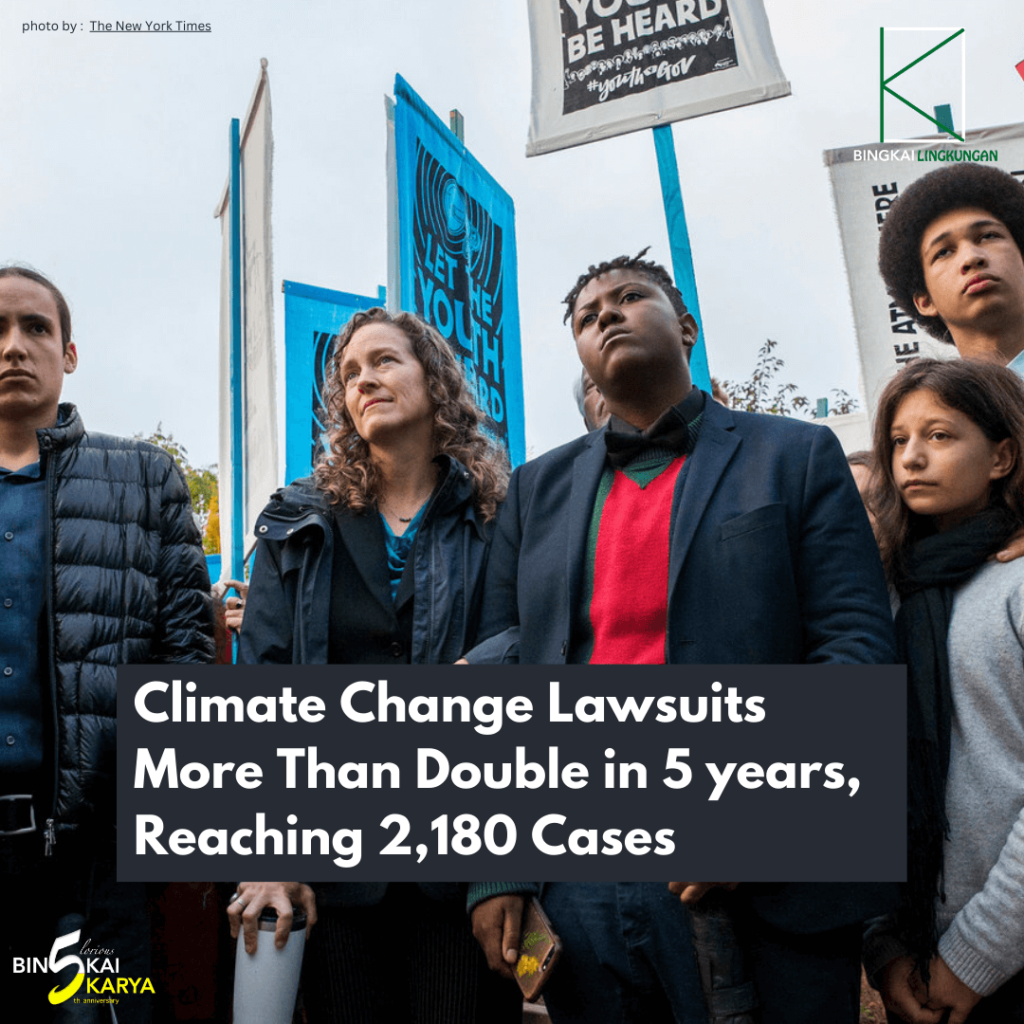
According to a report by the United Nations Environment Program (UNEP) and Columbia University in New York that tracks ongoing climate cases in a global database, the number of climate cases has more than doubled since 2017. Around 2,180 climate-related lawsuits have been filed in 65 jurisdictions over the last five years.
The increase in these figures has implications ranging from shrinking water sources to dangerous heat waves that have hit millions of homes and demonstrates that climate-related lawsuits are an important component of ensuring climate justice.
Oil and gas company Shell was ordered to comply with the Paris Agreement and to reduce its carbon emissions by 45 percent compared to 2019 levels by 2030, which is the first example of a private company obligation.
While the United States still dominates with more than 1,500 cases, other countries are seeing increases. About 17 percent of cases have been filed in developing countries, according to the report, with rainforest-rich Brazil and Indonesia among the countries seeing the most.
Based on a 2023 snapshot from the London School of Economics and Political Science (LSE), there were 2,341 climate change cases captured in the Sabin Center database, 190 of which were filed in the last 12 months.
Additionally, many cases involve claims based on accusations of corporate greenwashing or advocating for greater climate disclosure. A total of 34 cases brought by or on behalf of youth and children under the age of 25, as well as the case in Switzerland surrounding how climate change is disproportionately impacting older women.
Read also : Climate Change Caused World’s Biggest Permafrost Crater Melts
The UN report says most climate change cases fall into one or more of the half a dozen categories, including human rights cases, the need for greater climate disclosure and corporate responsibility and liability for climate-related harms.
Cases were brought before 65 international, national, regional, quasi-judicial, courts and other judicial bodies around the world. The report also anticipates bottlenecks in the application of climate attribution science and an increase in case of “backlash” aimed at dismantling climate action regulations.
Source: fijitimes.com, nationofchange.org
