

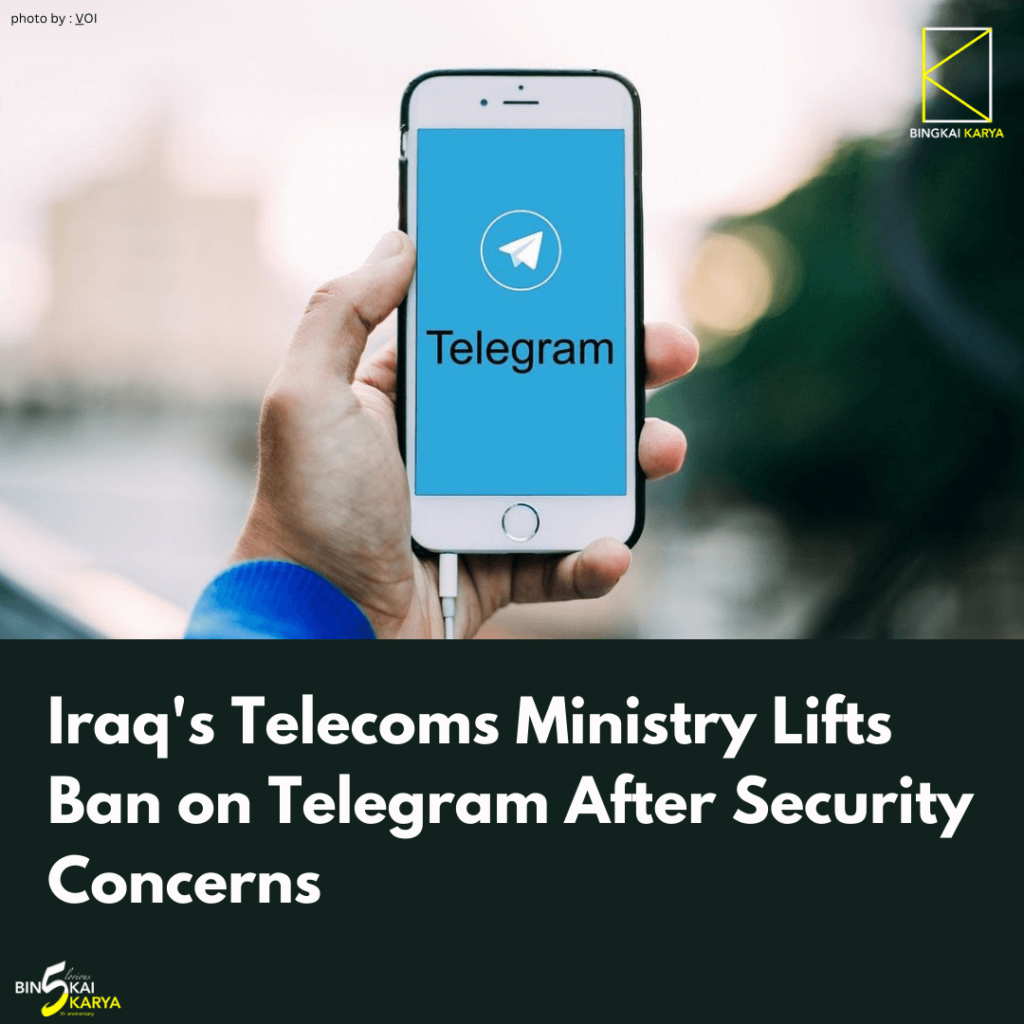
Iraq’s Ministry of Telecommunications recently announced its decision to lift the ban on the popular messaging app, Telegram. The move comes after the app faced a blockade due to concerns over national security and the safety of user data.
The ministry cited worries that the app was being utilized by militia groups and had also experienced data leaks, which included sensitive state information and citizens’ personal data. This ban aimed to curb illegal activities and safeguard user privacy.
Telegram’s response to the ban was measured and proactive. Despite the restrictions, the company assured its Iraqi users that it was actively engaging in discussions with the government to resolve the issue. These talks evidently proved fruitful, as the telecoms ministry subsequently decided to lift the ban.
The ministry’s statement regarding the decision emphasized the cooperation between the platform’s owning company and security authorities. It highlighted the company’s commitment to address concerns related to leaked data and its willingness to collaborate with relevant authorities. Consequently, the ban was revoked on the specified date.
Read also Celebrating World Telecommunication and Information Society Day, Here are the History
Telegram’s willingness to address the Iraqi government’s security requirements showcases its dedication to maintaining the app’s integrity and user security. The company pledged to implement measures to prevent the misuse of the platform for illegal activities and to ensure the protection of user privacy. Telegram emphasized existing data protection features, such as end-to-end encryption, which guarantees that only the sender and recipient can access message content, enhancing overall security.
Additionally, Telegram introduced features like self-destructing messages and two-factor authentication, aimed at enhancing user security. The company’s willingness to accommodate the Iraqi government’s concerns demonstrates a balanced approach to technology regulation, safeguarding national security while preserving users’ rights to communication and privacy. This incident underscores the ongoing struggle to strike a harmonious balance between digital freedom and security measures in an increasingly interconnected world.
Source : Reuters, GizChina
