

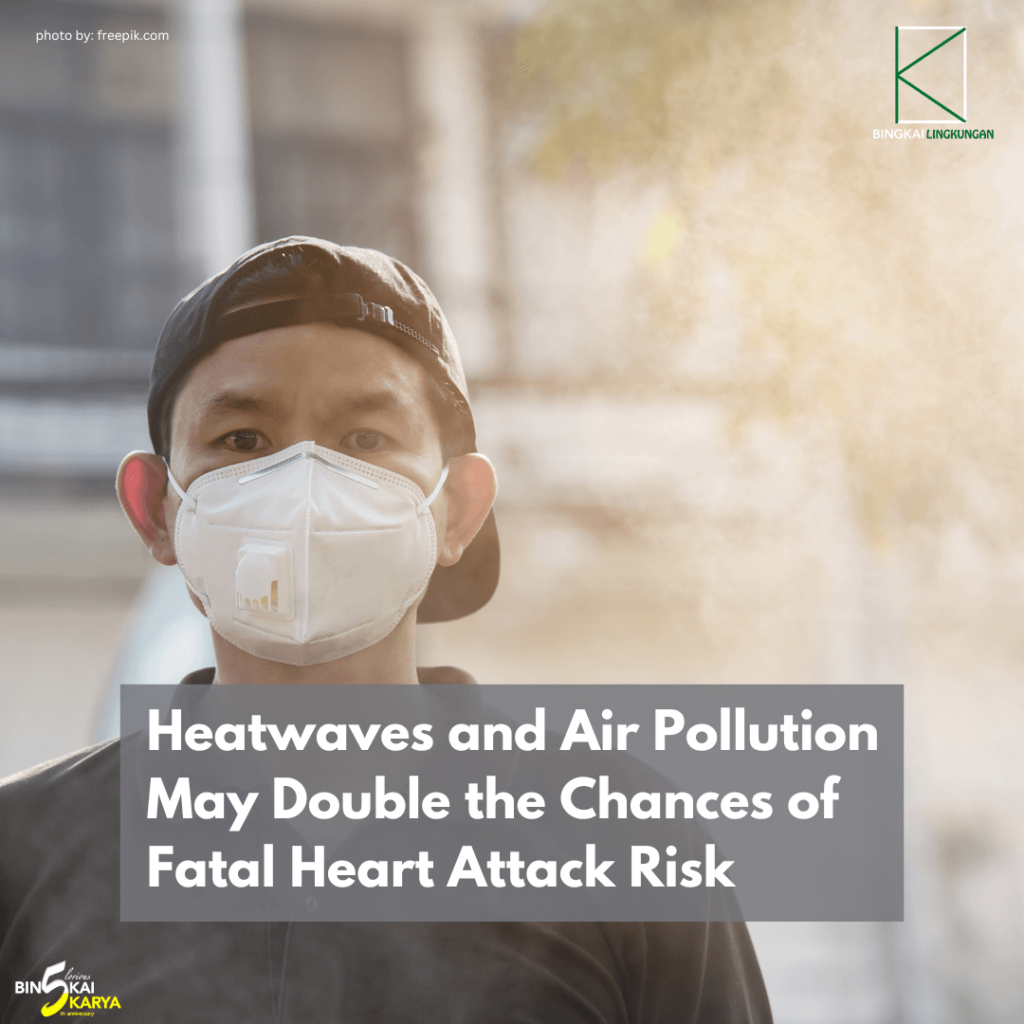
A study published in the Journal of the American Heart Association, “Circulation,” examined heart attack deaths in a Chinese region from 2015 to 2020. The province experiences four seasons, with a broad range of temperatures and occasionally significant levels of air pollution.
Twice as many residents died of heart attacks after four days or more of high feels-like temperatures or heat indexes ranging from 82.6 to 109.4 degrees Fahrenheit, with high concentrations of fine particulate matter in the air on the day of death and/or the day before. According to scientists, the combination of factors caused 2.8% of heart attacks. Feels-like temperatures of 95 or above elevated the risk of a heart attack by 75%.
The study’s findings revealed that heat indices of 91.2 – 104.7 Fahrenheit for at least three days caused 3.2% of the 202,000 fatal heart attacks. Women and adults over the age of 80 were the most vulnerable.
Read also : Climate Change Brings the Impact of Heat Waves Hitting the Seabed
The study also discovered that the risk of fatal heart attacks rose during heat waves alone: by 18% during a 2-day heat wave with heat indices ranging from 82.6 to 97.9 degrees Fahrenheit, and by 76% during a 4-day heat wave with heat indices ranging from 94.8 to 109.4 degrees Fahrenheit.
The greatest method to reduce your risk of deadly heart attacks caused by harsh weather is to monitor predictions.
Source: foxweather.com
