

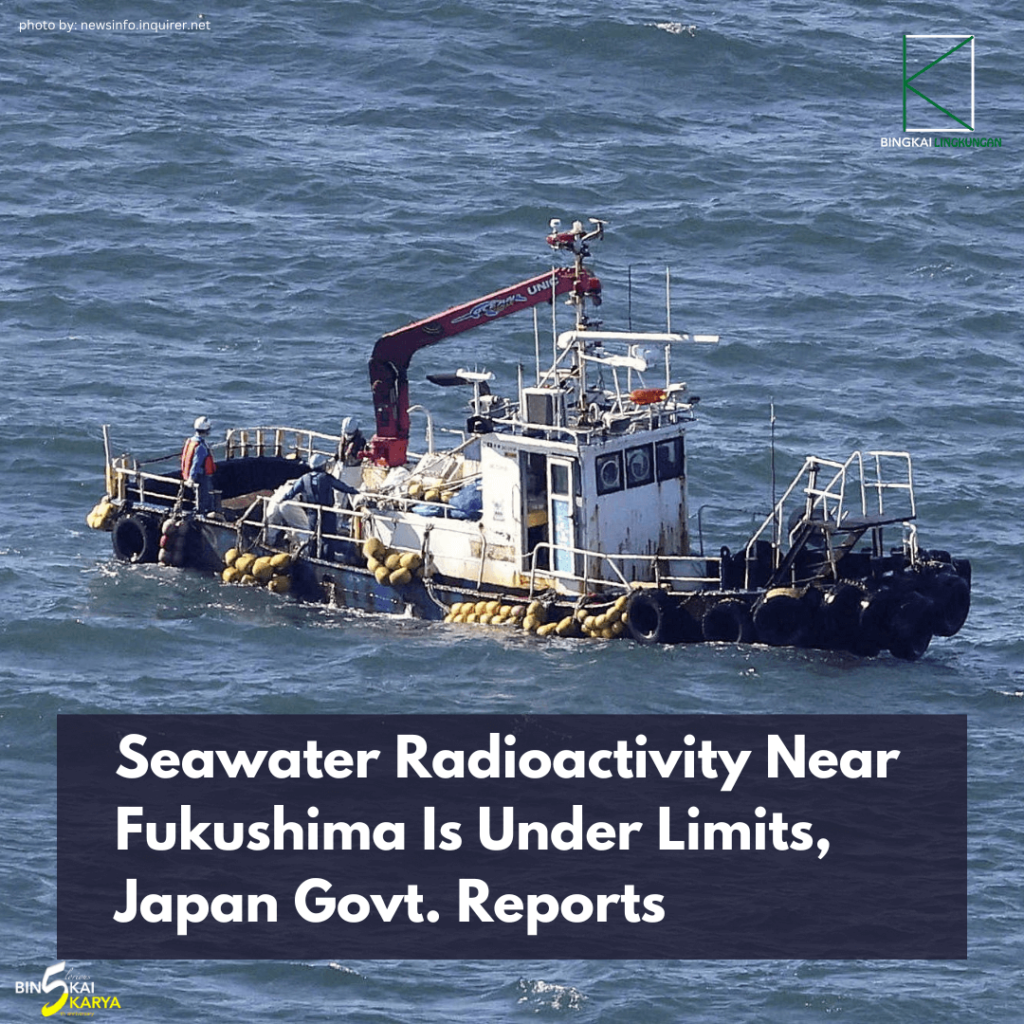
Seawater tests near Japan’s Fukushima nuclear power plant found no radiation, the environment ministry said on August 27, days after authorities began dumping treated water used to cool damaged reactors into the sea.
On Thursday, Japan began dumping water from the stricken Fukushima nuclear power plant into the Pacific Ocean, provoking complaints in Japan and surrounding countries, particularly China, which banned Japanese aquatic product imports.
According to Japan and scientific bodies, the water is safe after being filtered to eliminate most radioactive constituents except tritium, a radioactive hydrogen isotope. Due to the difficulty of separating tritium from water, Fukushima water is diluted until tritium levels fall below legal limits.
The ministry’s analyses of samples from 11 locations near the facility found amounts of radioactive isotope tritium below the lower limit of detection – 7 to 8 becquerels of tritium per liter – and determined that it “would have no adverse impact on human health and the environment.”
Environment Minister Akihiro Nishimura said in a statement that monitoring would be done “with a high level of objectivity, transparency, and reliability” to avoid damaging Japan’s reputation.The ministry would publish test results every week for at least the next three months.
Tokyo Electric Power Co (Tepco) announced on Friday that seawater near the plant contained fewer than 10 becquerels of tritium per liter, much below its self-imposed limit of 700 becquerels and well below the World Health Organization’s drinking water standard of 10,000 becquerels.
Read also : Japanese Prime Minister Kishida to visit Fukushima Plant for Treated Water Release
Tepco stated on Sunday that no major change has been found. Fukushima prefecture also released results from nine places near the facility that revealed tritium levels below acceptable levels. Tepco is storing 1.3 million tonnes of polluted water in containers on the site, enough to fill 500 Olympic-sized swimming pools. The first 7,800 cubic meters, roughly enough for three Olympic pools, will be released in 17 days. It is predicted that it will take approximately 30 years to complete.
Source: channelnewsasia.com
